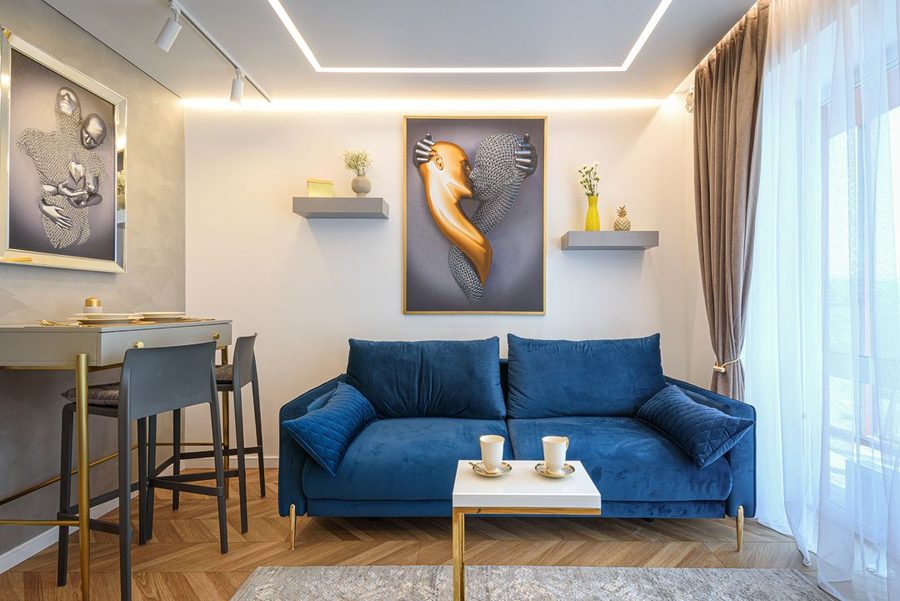
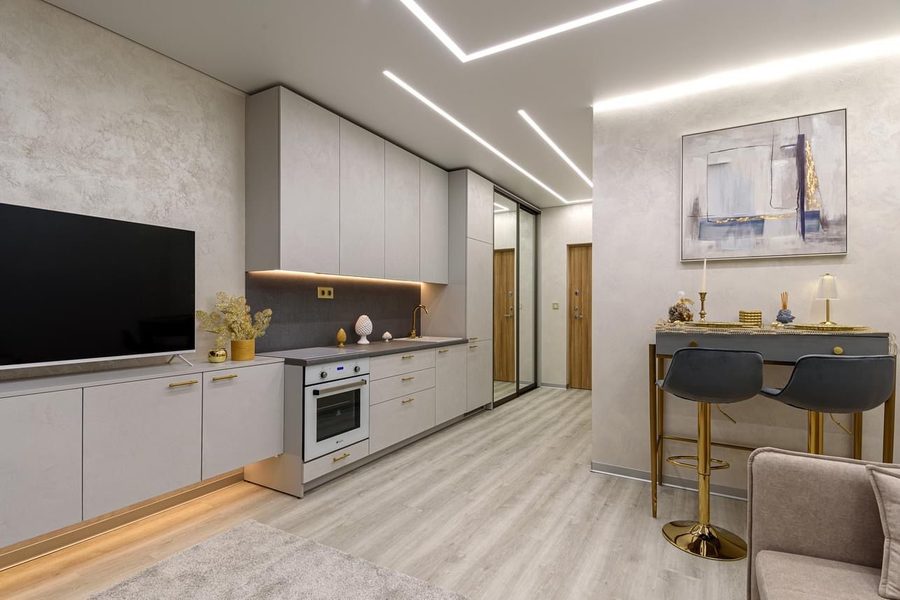
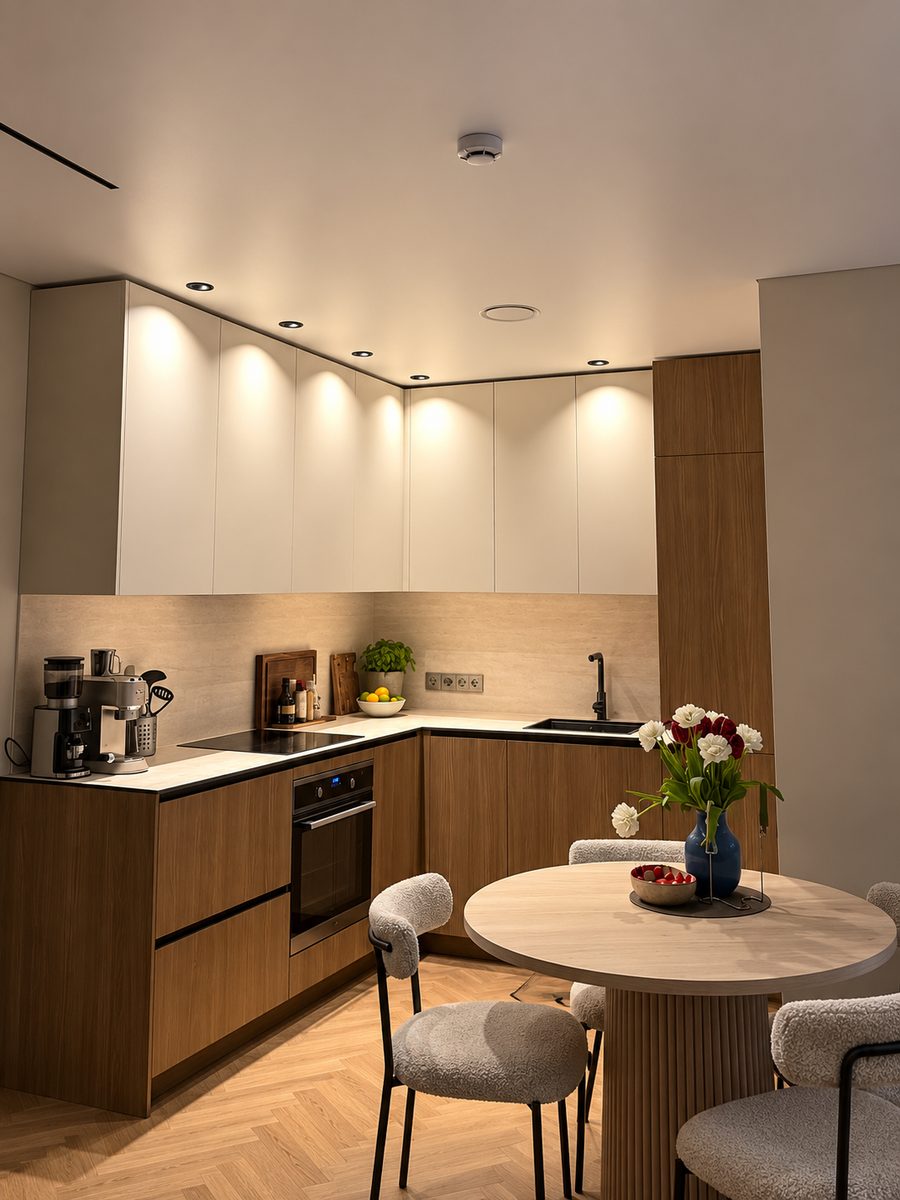
Ceiling and lighting solutions that we match with each other and with your interior.
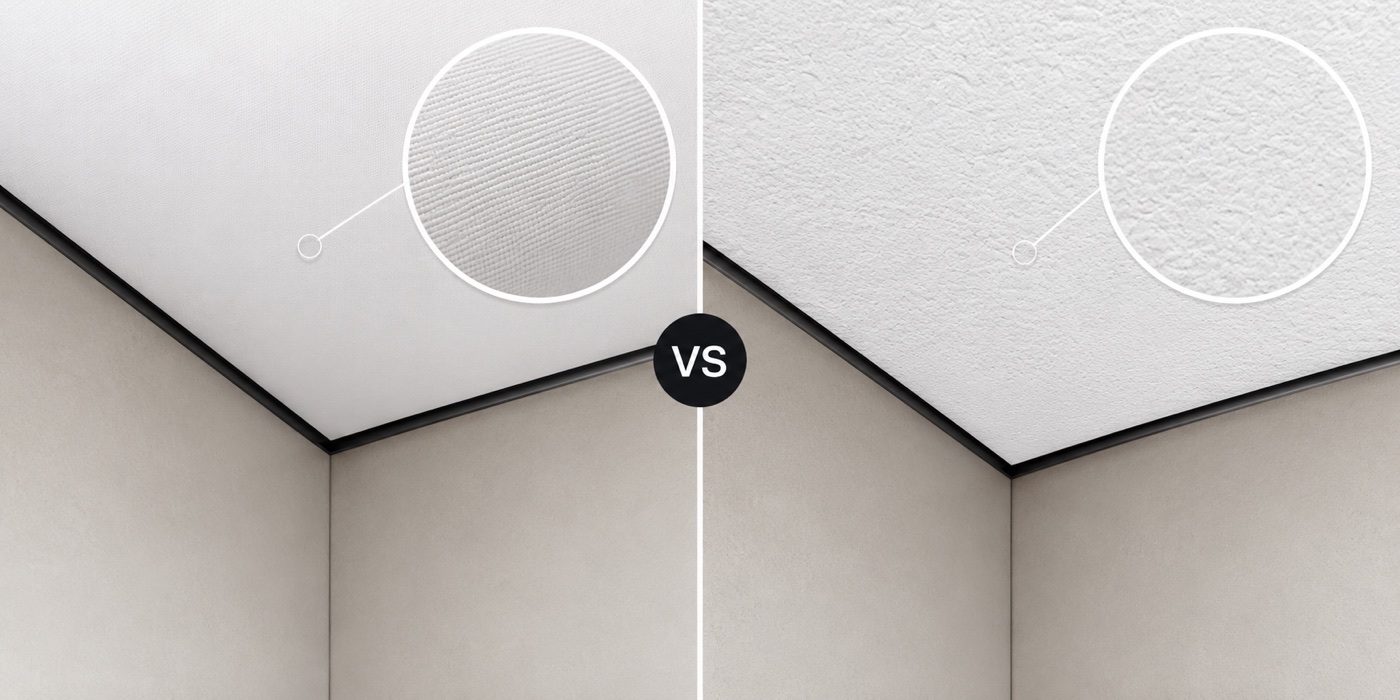
PVC or fabric ceiling?
Which to choose?
More
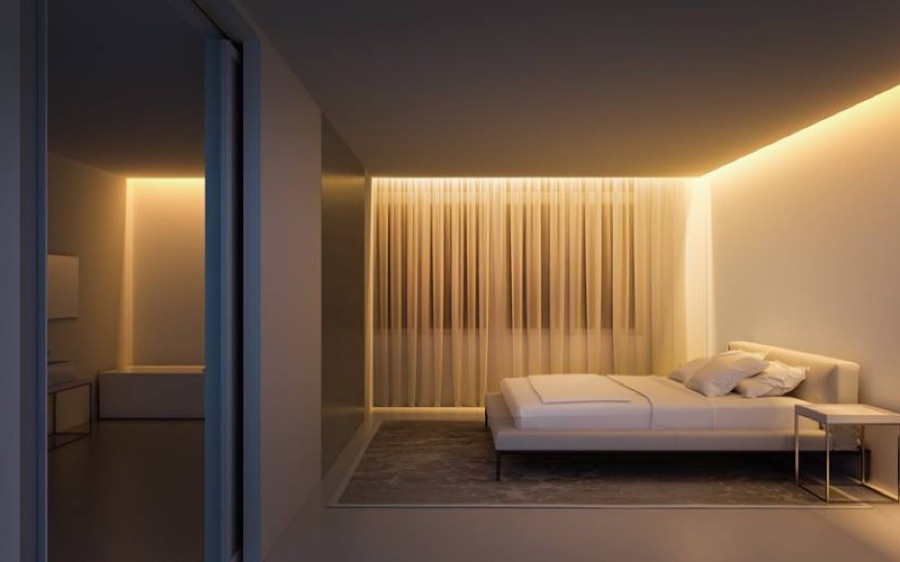
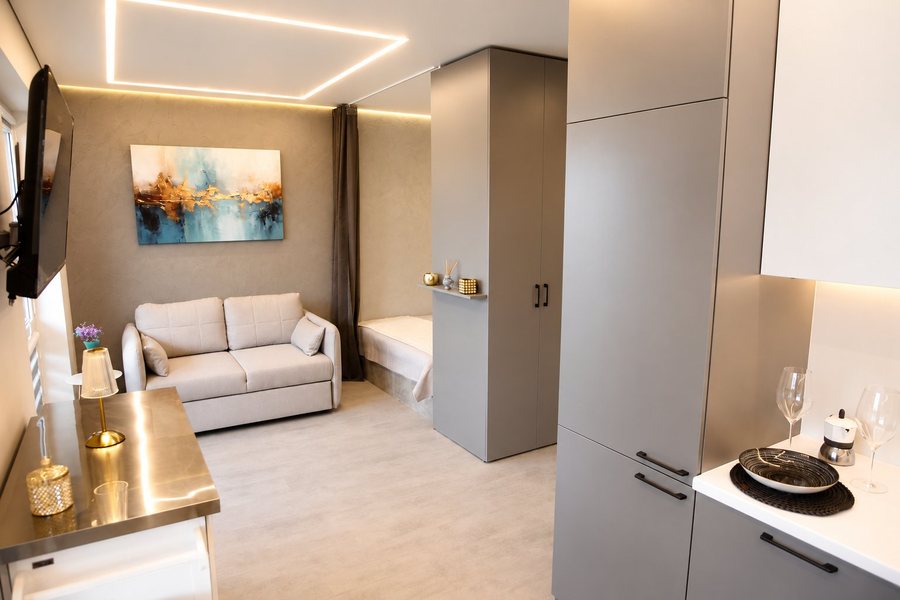
Floating ceiling lighting
Light that makes the ceiling feel weightless.
More
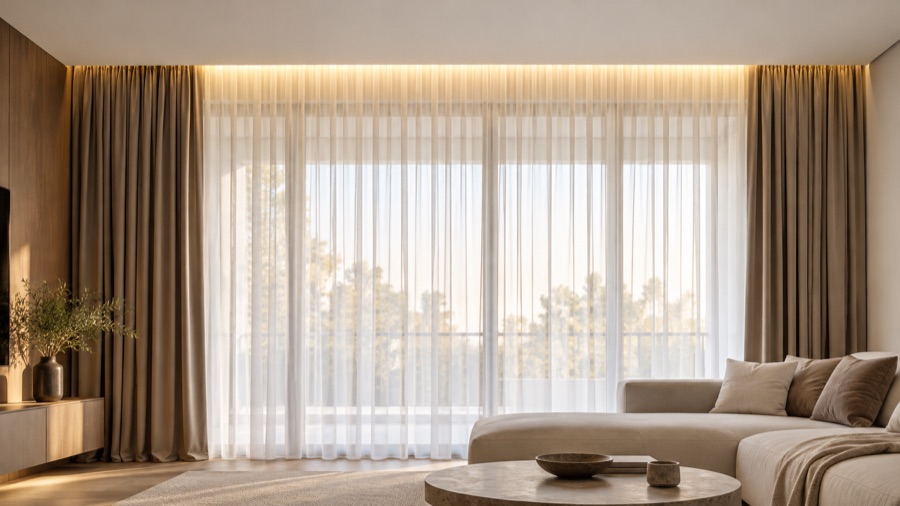
Curtain niches
A neat and minimalist solution.
More
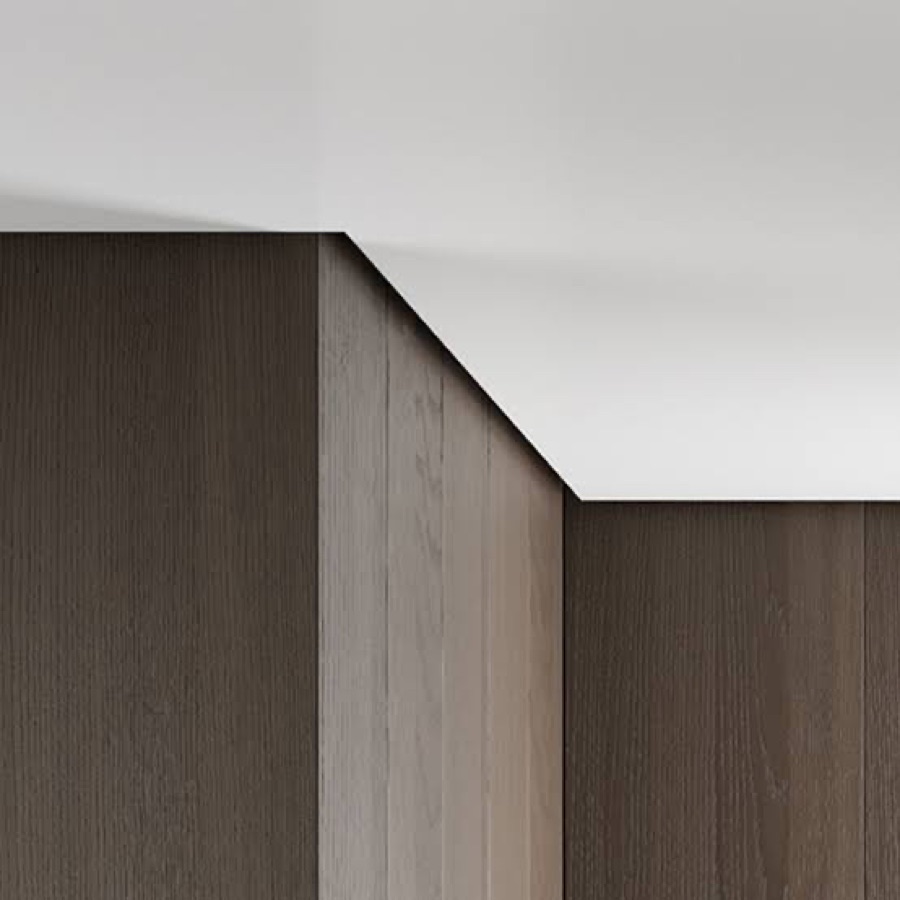
Shadow profiles
A modern joint between ceiling and walls.
More
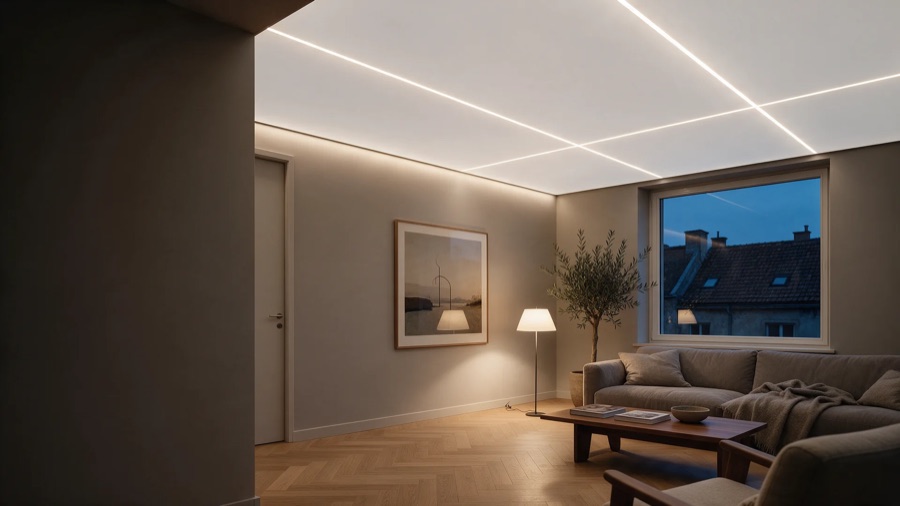
LED lines
Integrated decorative and functional lighting.
More
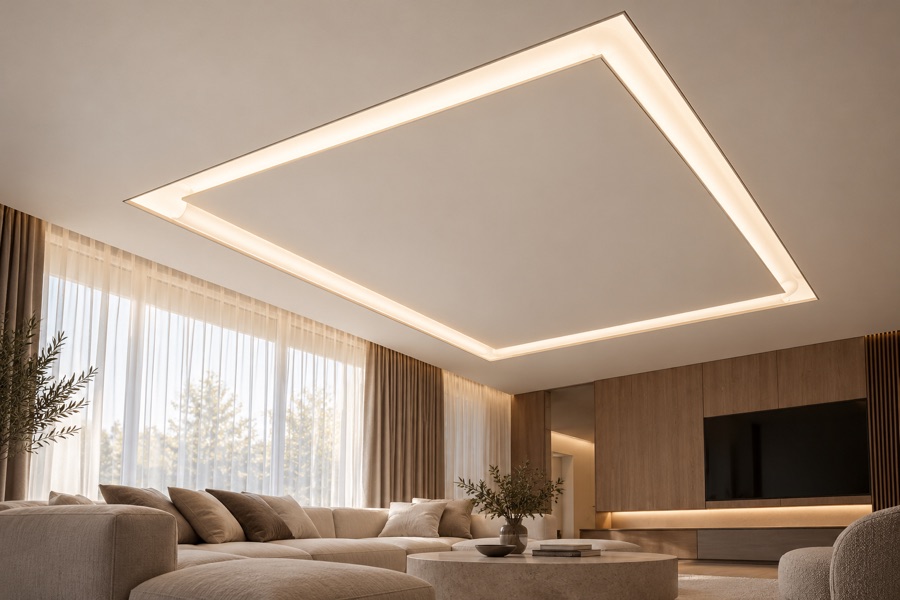
Light tunnel
A glowing structure recessed into the ceiling.
More
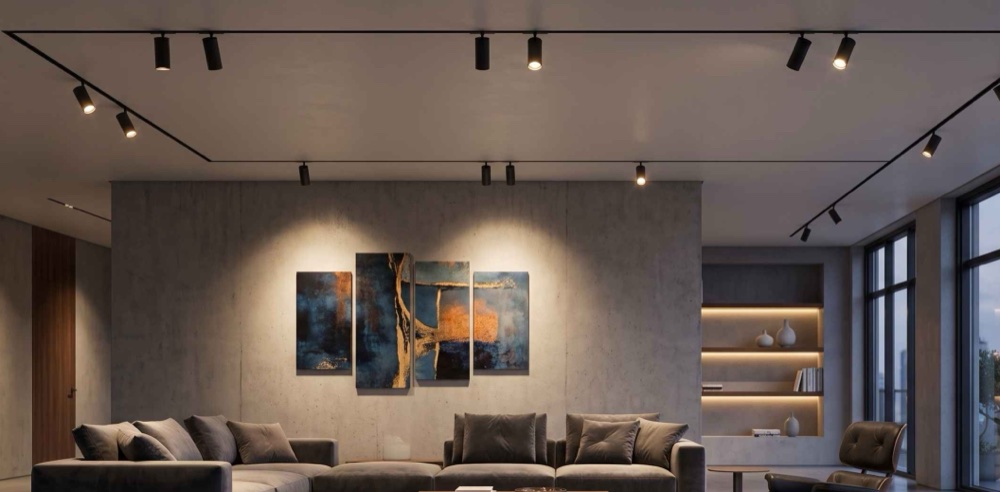
Magnetic lighting
Flexible lighting solutions for a modern interior.
More
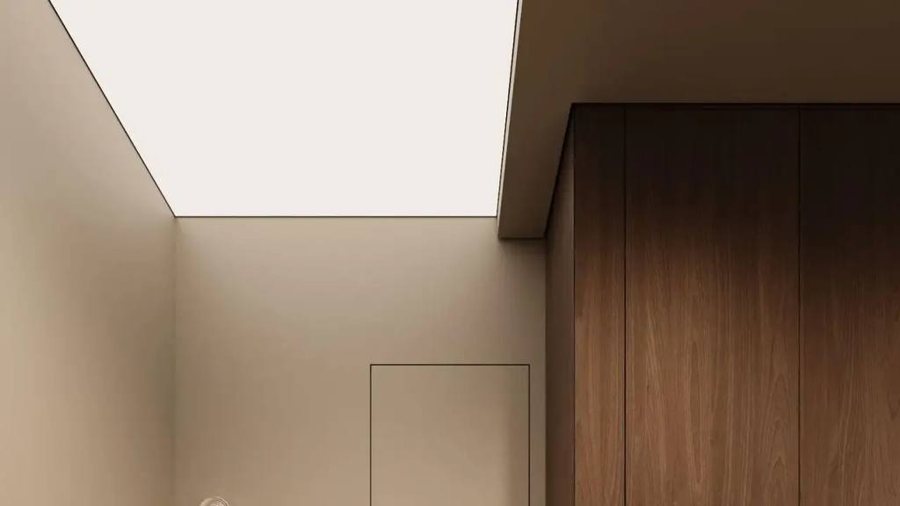
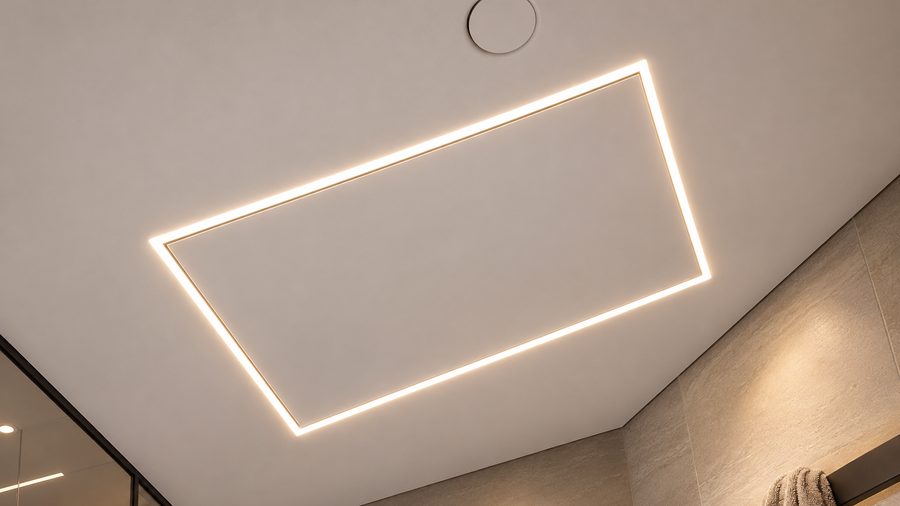
Light-emitting ceilings
Evenly lit ceiling solutions.
More
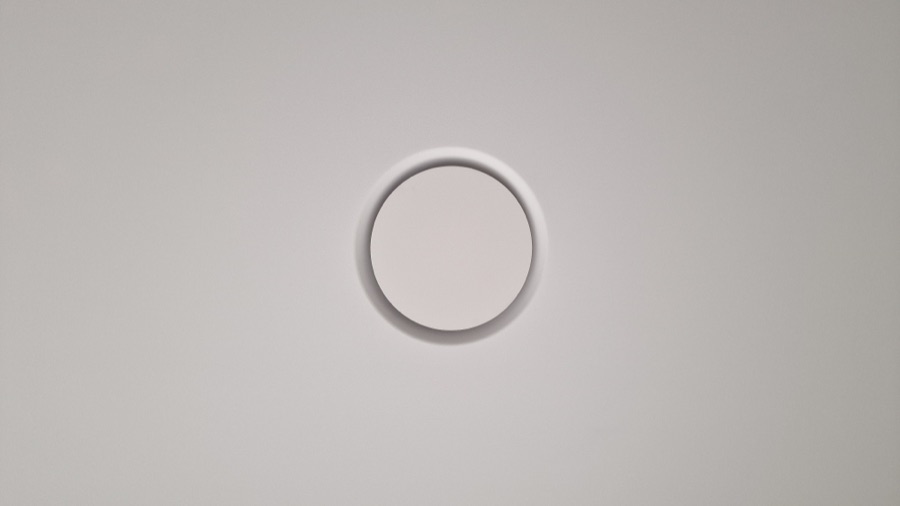
Integrated diffuser
Ventilation hidden in the ceiling.
More
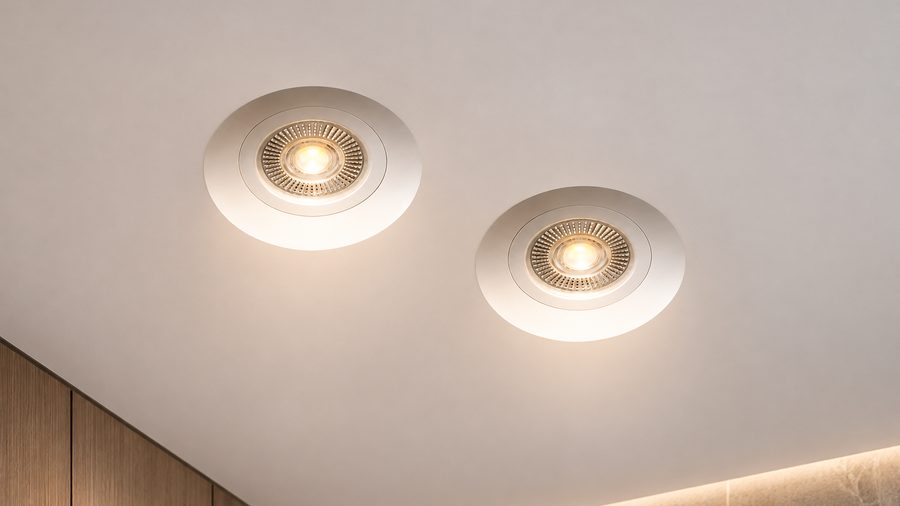
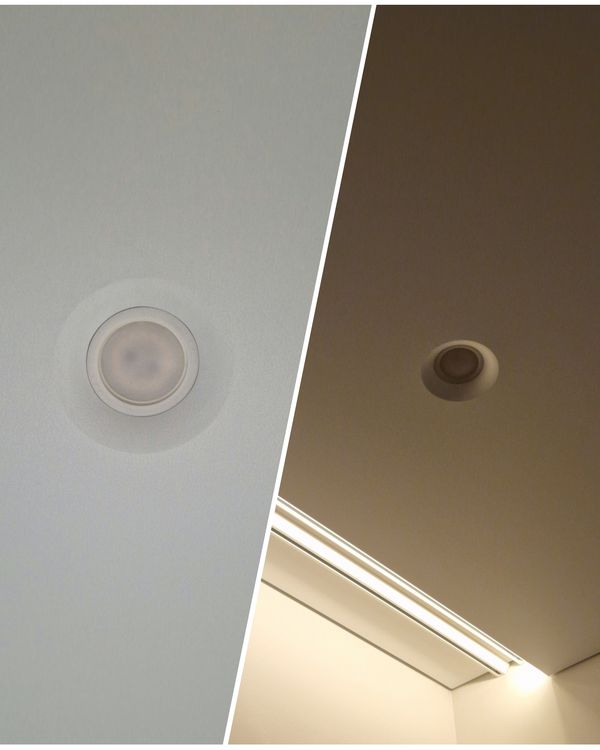
Trimless spotlights
Spot lighting built into the ceiling.
More
Access hatches
Easy access, almost invisible in the ceiling.
More
PVC or fabric ceilings: which to choose?
When choosing a stretch ceiling, what matters is not only how it looks, but also how practical it is, how easy it is to maintain and how well it suits your home. PVC and fabric ceilings have different properties, so the best choice depends on your needs.
What is a PVC ceiling?
PVC ceilings are made from polyvinyl chloride (PVC) film – a polymer material used in many areas of everyday life.
PVC is also used in:
Vinyl flooring.
Window profiles.
Artificial leather coverings.
What is a fabric ceiling?
Fabric ceilings are usually made from polyester fabric with a special coating. It is not an ordinary home textile – it is designed specifically for stretch ceiling systems.
Polyester is used in many areas:
Clothing and sportswear.
Home textiles such as curtains and upholstery.
Sustainability and indoor climate
Are fabric ceilings more eco-friendly than PVC?
You cannot tell from the material name alone. When assessing a ceiling's safety and environmental impact, consider the specific product's composition, its volatile organic compound (VOC) emissions, how it is made, how long it lasts and whether it can be recycled.
What about "breathable" fabric ceilings?
Fabric ceiling material may let air or water vapour through differently than PVC film, but that does not mean it replaces ventilation.
What matters most for indoor climate is proper ventilation, humidity control and an airtight building. The choice of ceiling material should be seen as one part of the overall solution.
Which is more practical – PVC or fabric?
PVC ceilings
A PVC ceiling can be a practical choice when easy maintenance and protection against possible flooding matter.
Advantages:
Flood protection. A properly installed, sealed system can temporarily hold water, but the result depends on the whole system and the specific circumstances.
Easier maintenance. A smooth surface is usually easier to clean.
Wide choice of designs. Matte, gloss, satin and other finishes are available.
Versatility. PVC ceilings are often chosen for kitchens, bathrooms and other rooms where moisture tolerance matters.
Keep in mind that after a flood the water must be removed by professionals and the ceiling cavity checked. Not every PVC system guarantees protection against every flood.
Fabric ceilings
Fabric ceilings are usually chosen for their look and the way they are installed.
Advantages:
Ultra-matte surface. Suits those looking for a subtle, seamless and understated interior.
Installed without heating the room. Convenient in finished homes with delicate furniture or other interior elements.
A more natural fabric look. The surface resembles a matte painted ceiling.
Acoustic solutions possible. Specially designed fabric ceilings with acoustic materials can help reduce echo in a room.
Care of a fabric ceiling depends on the specific product and its coating. Some stains are harder to remove than from smooth PVC, so follow the manufacturer's recommendations before cleaning.
What would I choose?
I would choose PVC if:
I want to reduce the risk of damage from a possible flood.
Easy everyday care matters to me.
I need a versatile solution for a kitchen or bathroom.
I want to choose from different finishes and designs.
I would choose fabric if:
I want an ultra-matte, subtle surface.
It matters to me that the room is not heated during installation.
I value the look of fabric.
I am planning an acoustic solution combining a fabric ceiling with special sound-absorbing materials.
What matters most is not just the material, but the whole ceiling system
PVC or fabric is only one part of the decision. The final result also depends on the profiles, joints, quality of installation, lighting and choosing the right materials for the specific room.
If you are fitting out a new home or planning a full renovation, it is worth designing the ceiling and lighting together. That way light lines, magnetic tracks, curtain niches and other interior elements can be planned in advance around your needs, furniture layout and how each room is used.
Coandă diffusers – comfort built into the ceiling
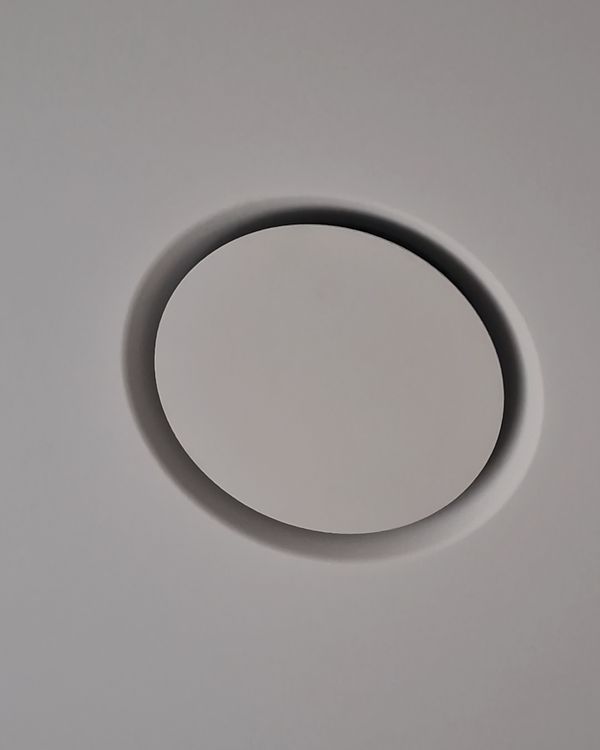
Coandă diffusers are a modern ventilation solution that combines function with minimalist design. Thanks to their special construction, the airflow is directed along the ceiling surface, which helps it spread more evenly through the room and reduces the feeling of a direct draught.
Unlike ordinary visible ventilation grilles, these diffusers can be discreetly integrated into a stretch ceiling, keeping the ceiling surface visually clean and uninterrupted.
The result is neatly integrated ventilation that helps keep a comfortable indoor climate without cluttering the interior with extra details.
Trimless spotlights – spot lighting without a visible frame
Trimless spotlights are installed flush with the ceiling, with no protruding frame: the ceiling surface flows smoothly into the light opening, while the whole fitting stays hidden above the stretch ceiling.
Before the ceiling is stretched, a mounting platform is fixed to the base ceiling for each light. It holds the light exactly in place, so the ceiling around it stays smooth.
We plan the positions and number of lights in advance – based on how the room is used, the furniture layout and other lighting solutions such as LED lines or magnetic systems.
Access hatches – reach what is above the ceiling without taking it apart
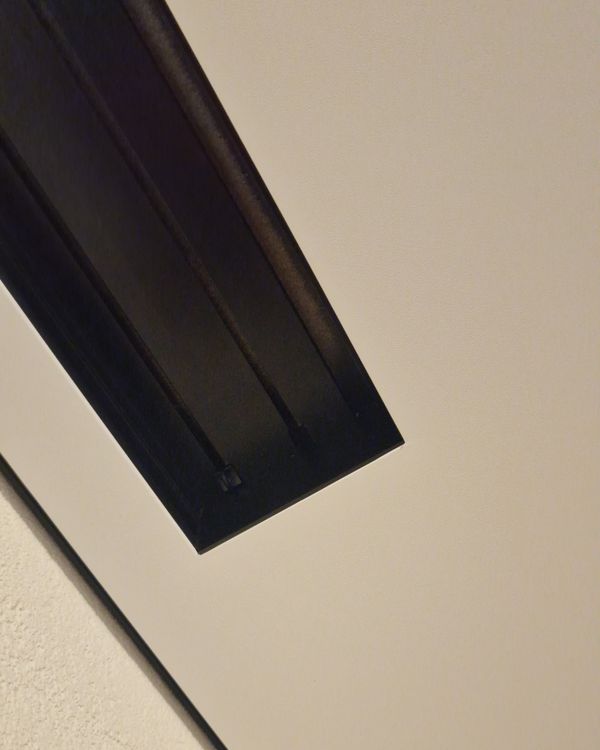
Ventilation, plumbing or electrical units often stay above a stretch ceiling and sometimes need to be reached. An access hatch is installed flush with the ceiling and opens on hinges, so the ceiling does not have to be taken down.
When closed, the hatch blends into the ceiling and is almost invisible. Its outline can be highlighted with an LED line – then the hatch becomes a design accent.
We agree on the position and size of the hatch in advance – based on what is above the ceiling and how it is easiest to reach.
LED lines – lighting tailored to your needs
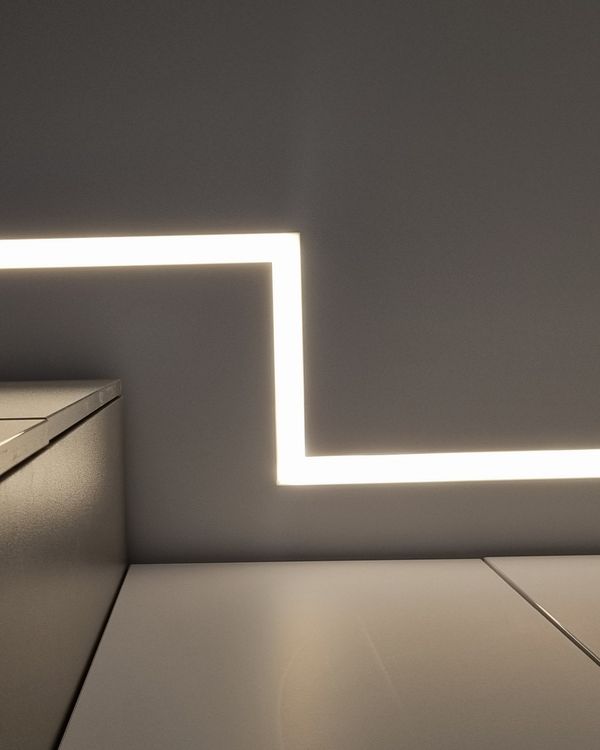
Integrated LED lines let you create a distinctive ceiling design and adapt the lighting to your interior and everyday needs. Light lines from 20 to 50 mm wide are available, depending on the desired look and the chosen profile system.
With a dimmer you can adjust the brightness – from bright light for everyday tasks to a soft evening atmosphere. With a tunable-white LED strip you can also change the shade of white light – from cosy warm to neutral or cooler white. The lighting can also be connected to a smart home system and controlled from your phone.
Every solution is chosen individually, based on the desired lighting effect, the profile construction and the ceiling design. This way the lighting becomes not just an interior detail, but a functional part of your home.
Light tunnels – architecture built into the ceiling
A light tunnel is a lighting solution integrated into the ceiling construction that gives the interior a distinctive, architectural character. The continuous glowing form emphasises the geometry of the ceiling, adds visual depth to the space and turns lighting into an integral part of the interior design.
The integrated construction keeps the ceiling lines clean, without extra hanging lights. The shape, dimensions and lighting of the tunnel are chosen according to the proportions of the room and the desired look.
It is a choice for those looking not just for a light source, but for an expressive architectural accent in their interior.
Light-emitting ceilings – even light throughout the space
A light-emitting ceiling is a modern lighting solution in which the ceiling surface itself becomes the light source. LED fixtures installed behind a special light-diffusing membrane create continuous, evenly distributed light, while the interior keeps a minimalist look without lots of separate fittings.
It is an especially practical choice for bathrooms, hallways and walk-in wardrobes – spaces where it matters to see well, do everyday tasks comfortably and avoid harsh, contrasting shadows.
In the bathroom, even general light creates a comfortable setting for daily care, and in the hallway it makes getting ready to leave the house easy. Combined with well-chosen mirror lighting, a light-emitting ceiling gives even better light on the face for shaving or make-up.
The result is a bright, visually seamless space where lighting is not a separate interior detail, but part of the architecture itself.
Shadow gap – a sense of lightness and precision
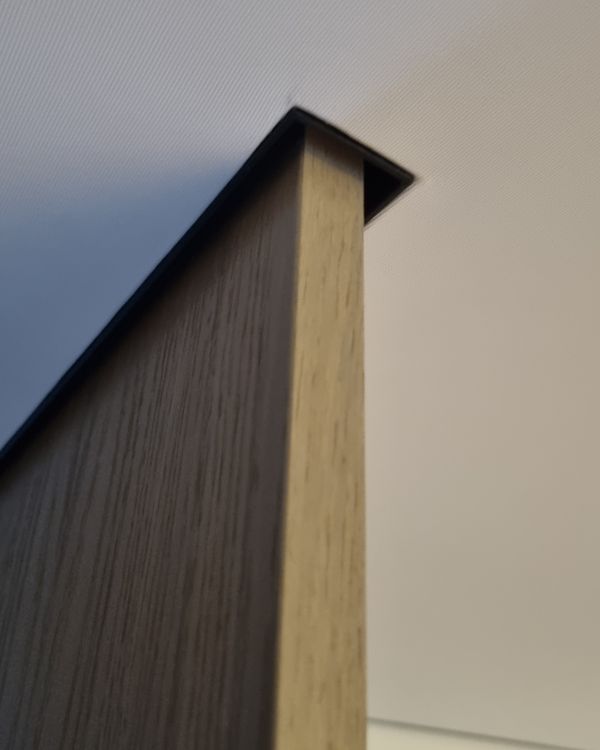
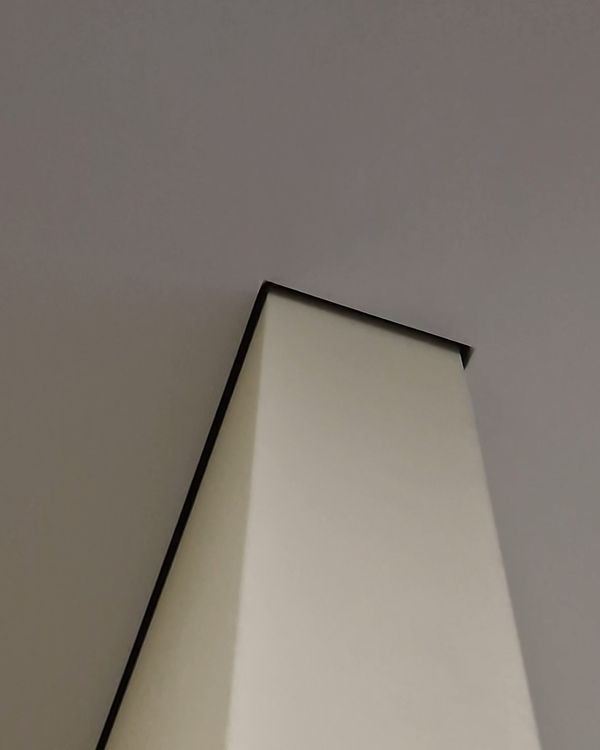
A shadow gap is a minimalist ceiling finish in which a precisely formed gap is left between the ceiling and the walls, creating a subtle line of shadow. The ceiling visually separates from the walls and gets a “floating ceiling” effect, while the interior keeps a clean look without traditional trim strips.
The shadow gap can be 5 to 9 mm wide, depending on the chosen profile. This solution emphasises the geometry of the ceiling, highlights the perimeter of the room and suits both minimalist and contemporary, architecturally considered interiors.
The result is a precise junction between ceiling and walls that gives the space visual lightness and subtle elegance.
Custom-made curtain niches
Curtain niches are designed to suit your interior and the type of curtains you plan to use. We can form niches of different depths – for light day curtains, heavy night curtains or multi-layer combinations.
A well-planned niche depth lets the curtains hang freely, keeps them clear of the windowsill and radiators, and makes them look neat. That is why we recommend planning the niche dimensions and the curtain mounting method already at the design stage.
Magnetic lighting – flexibility in your interior
A magnetic lighting system lets you combine different types of fittings on a single track and easily adapt the lighting to specific needs. You can choose directional spotlights, aim their light at the areas you need, or combine different light sources depending on the purpose of the room.
It is an especially practical solution in the kitchen, where the worktop, island or dining area need precise lighting. As your needs change, the layout and combination of fittings can be adjusted within the possibilities of the chosen system.
Smart control adds even more comfort: a compatible system can be divided into separate lighting zones and controlled from your phone, adapting the light to different activities and times of day.
It is a versatile solution for those who value modern design, functionality and lighting that fits their way of life.
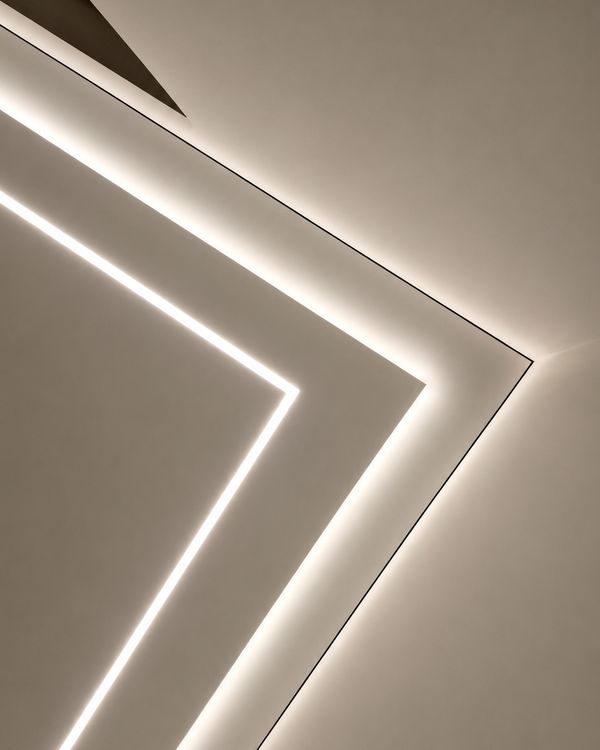
Floating ceiling lighting – light that makes the ceiling feel weightless
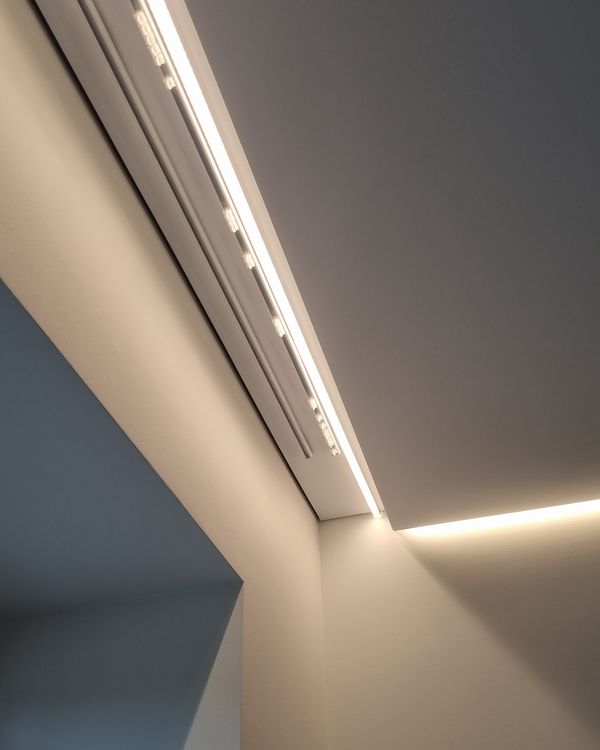
Floating ceiling lighting is a modern ceiling solution in which a special profile and LED lighting create the effect of a ceiling visually detached from the walls. A soft line of light emphasises the outline of the ceiling, adds depth to the space and helps create a distinctive, architecturally clean interior.
Minimalism created by light
Floating ceiling effect. The lit gap between wall and ceiling creates a sense of lightness, as if the ceiling were hovering in the air.
Subtle indirect lighting. A hidden LED strip creates a soft outline of light without cluttering the interior with extra fittings.
Clean architectural lines. The special profile avoids the usual decorative ceiling trim strip and keeps the look minimalist.
Freedom in interior design. The solution suits modern living rooms, bedrooms, hallways and other contemporary spaces.
Projects
Selected projects
Examples of stretch ceilings and integrated lighting in real interiors.
4 photos
Pašilaičiai | Vilnius28 m² | stepped bulkheads + LED lines + floating lighting + spotlights
4 photos
SKYLUM | Vilnius25 m² | LED niches + floating lighting + track systems + curtain niches
8 photos
SKYLUM | Vilnius25 m² | LED lines + floating lighting + curtain niches + shadow-gap profile
7 photos
CITUS Mūnai | Vilnius44 m² | stepped bulkheads + flush-mounted diffusers + magnetic tracks + curtain niches
Why us
Details you see up close
Real photos from our sites: corners, joints and light lines just as the client sees them.
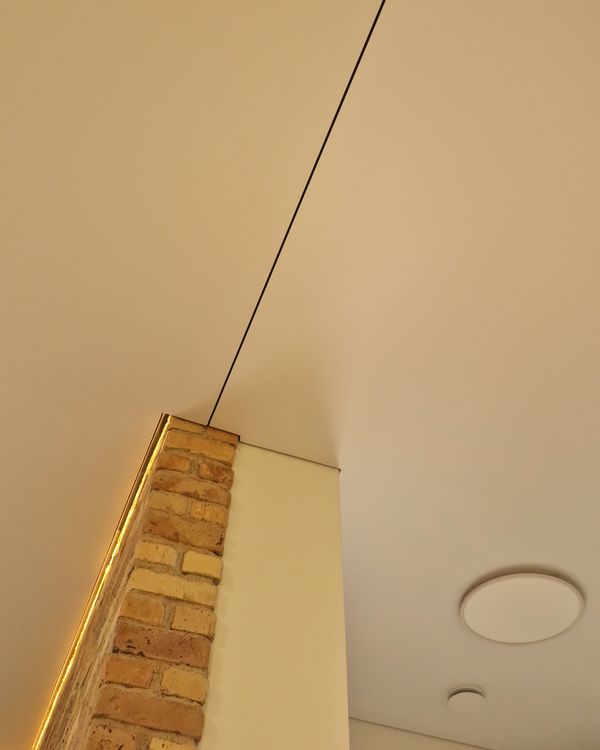
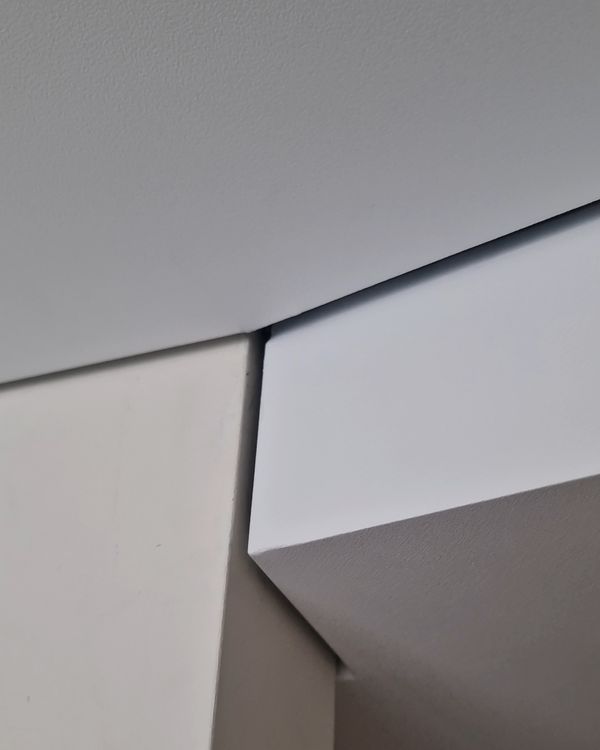
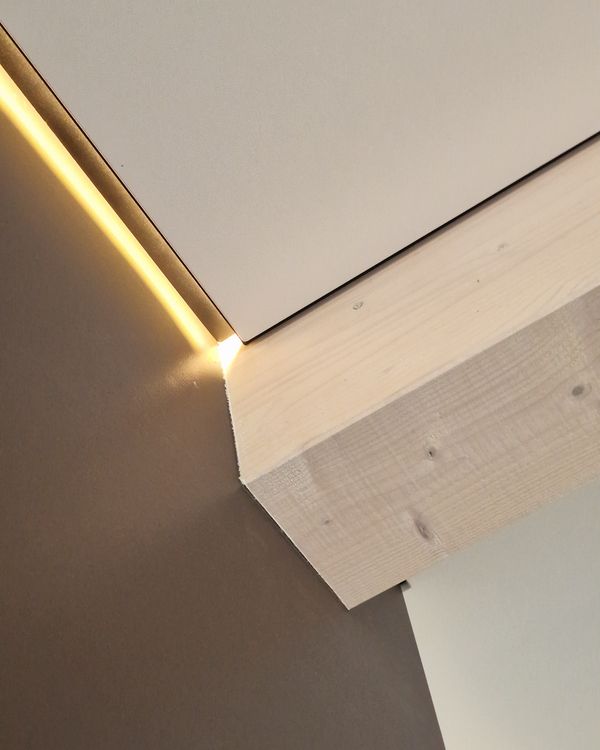
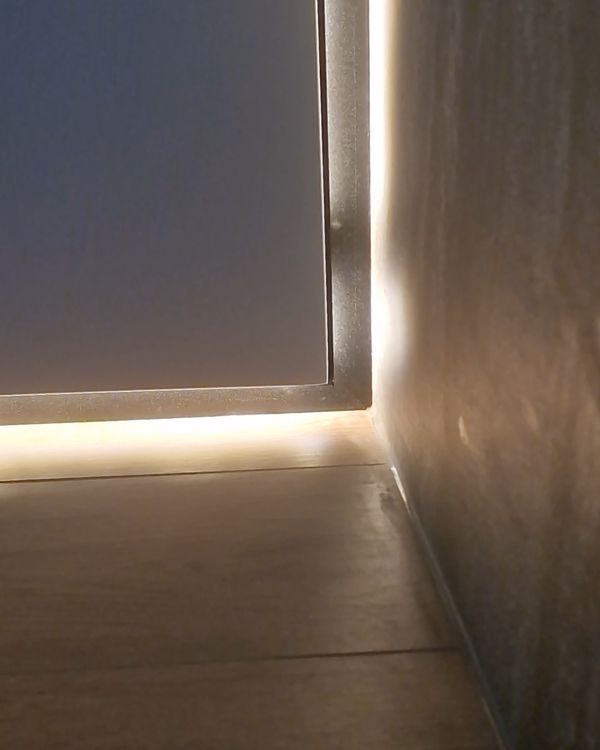
Column and ceilingAn even shadow gap around a furniture panel.Curtain niche with LEDA straight line of light right into the corner.Joint at the brickworkA straight dividing line in the ceiling and an LED outline along the brick.Hidden curtain nicheClean edges with no visible fixings.Ceiling diffuserVentilation built into the ceiling plane.Niche with LEDA curtain niche with LED lighting and precise corners.A tricky cornerThe ceiling fits precisely around the wall and beam projections.Column cornerAn even shadow gap along the whole edge.LED line in the ceilingClean corners with no dark spots.Trimless spotlightA built-in spotlight with rounded edges.Beam and LED lineThe ceiling and the light line fit tightly against a timber beam.Cleanly joined cornersPrecise joining of tricky floating-profile corners.
Before you choose
Worth knowing in advance
I
Plan the lighting together with the ceiling
Light positions, LED lines and profiles are best planned before installation – changing them later is harder and more expensive.
II
PVC or fabric
Both materials look neat. The difference is in surface texture, properties and price. We will help you choose for your room and interior.
III
A price without surprises
After the measurement you get a clear estimate, and the final price is written into the contract.
How we work
A calm process, clear commitments
01
Conversation
We discuss your space, project and the result you want – by phone or on site.
02
Measurement
We come, measure and propose a ceiling and lighting solution.
03
Contract
Price and deadlines are fixed in the contract – no surprises.
04
Installation
Usually in 1–2 days, neatly and without dust.
Reviews
What our clients say about our work
5,0
★★★★★
3 reviews Google
D
Darja Vasiljeva2026-10-20
★★★★★
Labai džiaugiamės pasirinkę šiuos meistrus! Skambinome į kelias įmones ir visur sakė, kad reikia keisti visas lubas, nors mums reikėjo tik perkelti rekuperatorių. Šie meistrai rado paprastą sprendimą ir viską atliko greitai bei profesionaliai. Likome labai patenkinti rezultatu, tikrai rekomenduojame!
Review from Google · original in Lithuanian
M
Monika Skrebyte2026-10-19
★★★★★
Puikiai, greitai ir profesionaliai :)) Lengvai susitarėme, nevėlavo:)) per valandą su puse nuėmė įtempiamas lubas, viską po savęs susitvarkė ;)) tikrai rekomenduoju:))
Review from Google · original in Lithuanian
Š
Šarūnas Kviklys2026-10-05
★★★★★
Labai džiaugiamės galutiniu rezultatu. Nuo pat pirmo kontakto bendravimas buvo paprastas ir malonus, viską pavyko lengvai suderinti. Matavimo metu gavome naudingų pasiūlymų ir kartu išsirinkome tinkamiausius sprendimus. Darbai atlikti tvarkingai ir kokybiškai, o galutinis vaizdas gavosi būtent toks, kokio tikėjomės. Ačiū už gerą darbą – tikrai galime rekomenduoti kitiems.